With a CE certificate and 8 patents, ENERPAT shredders are of high quality, durability, reliability, and efficiency. More importantly, all ENERPAT shredders are user-friendly to control and maintain.
ENERPAT provides a full range of equipment to meet different needs of shredding and recycling, from which customers can select suitable machines for their purpose and convert their waste materials into profitable products.
ENERPAT manufactures recycling machines that create more possibilities for different waste materials, such as wood, plastic, textile, metal, electronic waste, scrap cardboard, scrap furniture, tire, medical waste, municipal solid waste, industrial solid waste, construction & demolition waste etc.
If you are competent and interested in joining us as a sales agent, we are ready to answer any questions you may have at any time. Just contact us at your convenience.
ENERPAT has been specializing in waste shredding and recycling for over 80 years to maximize the value for customers of various waste materials by turning them into wealth in the most favorable way.
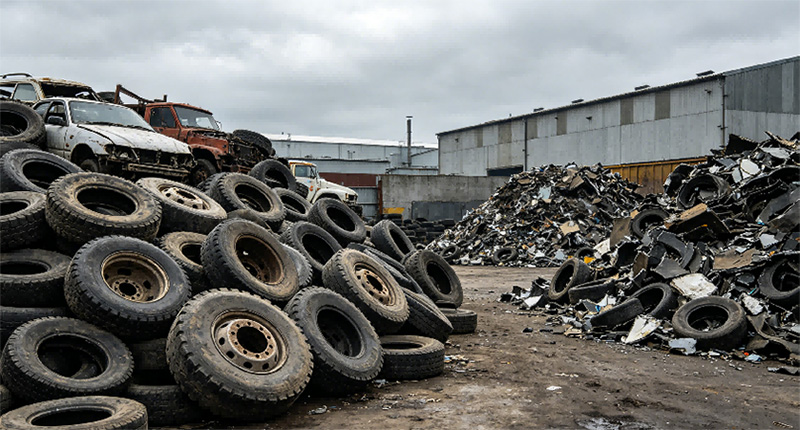
Since Australia's 2021 waste tyre export regulations took effect, whole tyres must be processed into fragments under 150mm before export. Together with stricter EPA requirements, more businesses tend to invest in local tyre recycling. This guide introduces how to shred EOLT, what valuable materials you can recover, and which equipment fits your recycling business.
How to Shred Old Tyres?
How Tyre Recycling Shredder Work?
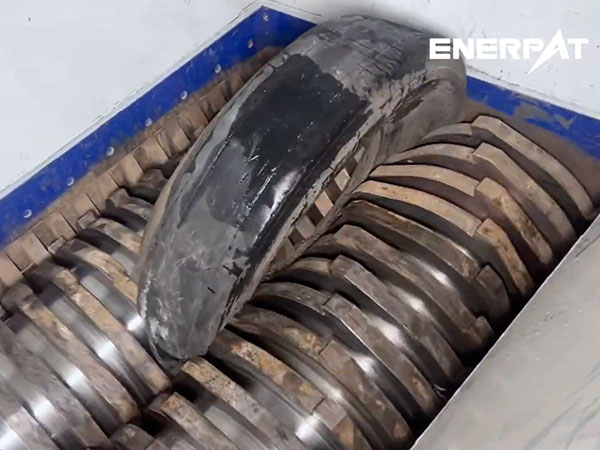
Stage 1 Whole Tyre Shredding
If your business handles large OTR tyres, you may choose a heavy-duty tyre shredder to breaking them down efficiently.
Reduce Tyre Volume: Whole tyres are bulky and expensive to transport, store, and handle without shredding. Therefore, the first step for you to start your tyre recycling business is to turn them into tyre chips. Smaller chips can greatly reduce transport and storage costs while making the following steps much easier.
Slash Your Transport Costs: Compared with whole tyres, tyre chips take up much less space. It allows you to pack more material in each load, reducing transport and storage costs and boosting your overall operating efficiency.
Meet Australian Regulations:
According to the Australia’s latest tyre export regulations in 2021, waste tyres exporters cannot simply collect and export these EOLT overseas. Instead, you must shred them into chips under 150mm before export. As a result, more money are invested in local tyre recycling.
If your business handles large OTR tyres, a heavy-duty tyre shredder also helps you process tyres on-site, meeting EPA waste tyre management requirements.
Stage 2 Separation
Remove Steel Wire:
After primary shredding, tyre chips still contain embedded steel wire. If the steel is not removed at this stage, it will directly affect the value of the final rubber products, which ultimately impacts your profit.
Downstream industries such as TDF producers, pyrolysis plants, and crumb rubber manufacturers require consistent and clean feedstock to ensure stable production quality.
Improve Rubber Purity (Cleaner Rubber): Once getting rid of steel, the rubber becomes much more cleaner. Without proper material purity, production efficiency drops and product value decreases. Steel contamination can lead to material rejection or lower selling prices. That’s why improving rubber purity is essential for your long-term business. Cleaner rubber is easier to process into valuable products such as crumb rubber and rubber powder. It also increases product quality, making it suitable for more commercial applications.
Recover Valuable Steel:
After separating the rubber and steel wire, you can also make money from the steel recovery. Those collected steel wire can be sold to add revenue stream for your business. Meanwhile, removing steel ahead helps reduce wear on downstream machine such as granulators and mills. It is beneficial for you to reduce the maintenance costs and the risk of downtime, improving operating efficiency in the long run.
Stage 3 Granulation:
Increase Product Value:
At this stage, shredded tyre fragments are processed into higher-value materials such as crumb rubber or rubber powder, which greatly increases their commercial value. However, many recyclers finds that this is the stage where stable material quality have a great impact on the final selling price.
Maintain Consistent Product Quality:
Downstream industries such as asphalt suppliers, sports surface contractors, and rubber manufacturers require consistent particle size and stable material quality. If the rubber size is uneven or not within specification, buyers may reject the material or reduce the purchase price. This makes production control a critical factor in this stage.
Access Wide Commercial Applications:
Granulation requires continuous mechanical processing, which leads to high energy consumption and equipment wear. In Australia, where electricity and labour costs are relatively high, inefficient systems can quickly reduce overall profitability. This is why operators focus on stable, low-wear, and energy-efficient equipment.
Stage 4 Material Collection
Final Material Recovery & Separation:
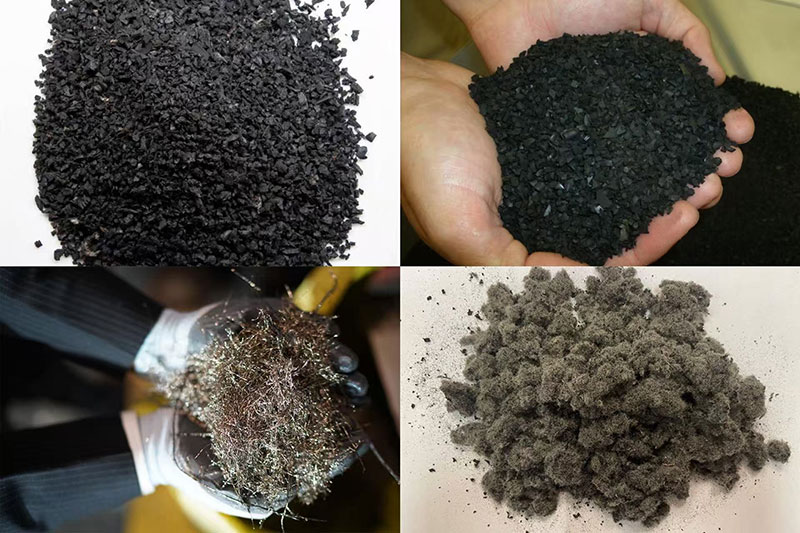
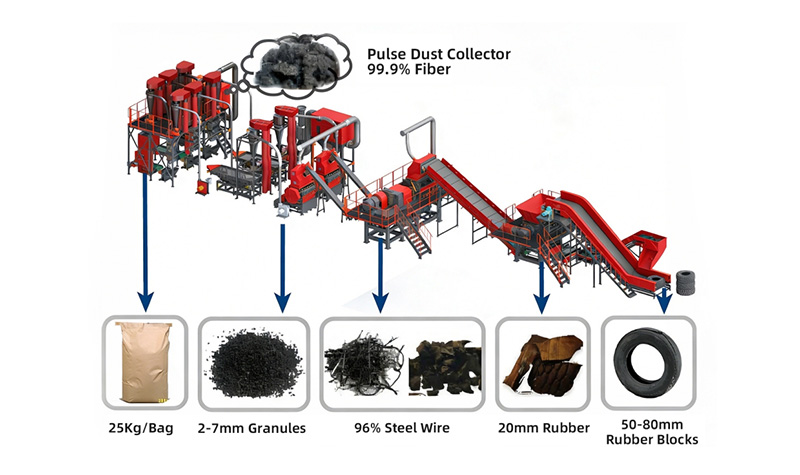
After processing, all materials are separated and collected into different value streams. Each output has its own commercial use and market demand.
Rubber Products:
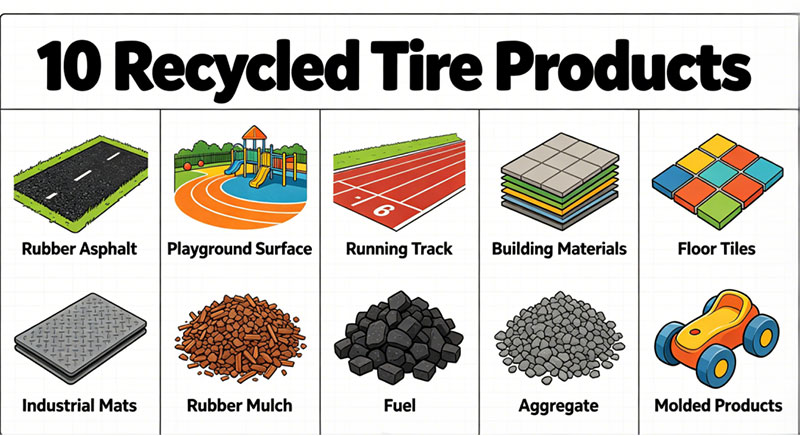
Crumb rubber for sports surfaces and playgrounds
Rubber powder for industrial manufacturing
Material for modified asphalt production
Used in rubber mats and moulded products
Recovered Steel:
Collected as recyclable scrap steel
Sold to metal recycling and steel processing industry
Helps offset operational costs and improve ROI
Textile Fibre:
Separated fibre from tyre structure
Used in selected industrial and low-grade applications
Can be further processed or disposed depending on regulations
What Valuable Materials You Can Recover After Shredding?
Rubber chips for tyre-derived fuel (TDF)
Crumb rubber for sports surfaces, playgrounds, rubber mats, and modified asphalt
Rubber powder for industrial rubber products
Recycled steel wire for metal recycling
Textile fibre used in selected industrial applications
Pyrolysis feedstock for producing pyrolysis oil, recovered carbon black, and combustible gas
The final recovered materials depend on the recycling process and the equipment used.
Why Businesses Shred End-of-life Tyres:
Add Revenue Streams:
Shredding tyres allows businesses to gain profits from waste and get lucrative materials such as tyre chips, crumb rubber, or tyre-derived fuel (TDF). You can have multiple income channels instead of relying on a single income source.
Reduce Operating Costs:
Through reduction on tyre volume, you can benefit from less spending on transport, handling, and storage. The money you saved can be reinvested into equipment upgrades or business expansion.
Increase Operating Efficiency
After shredding and processing, the tyre chips, rubber and steel wires are easier to process in downstream systems. It reduces delays in production, boosting the overall operation and decreasing your machine maintenance costs.
Markets for Shredded Tyres
Tyre-drived Fuel
Road Construction and Infrastructure
Sports Fields and Playground Surfaces
Rubber Products
Pyrolysis
Choose the Right Shredding Machine for Your Recycling Business:
The right equipment depends on your target product and business model.
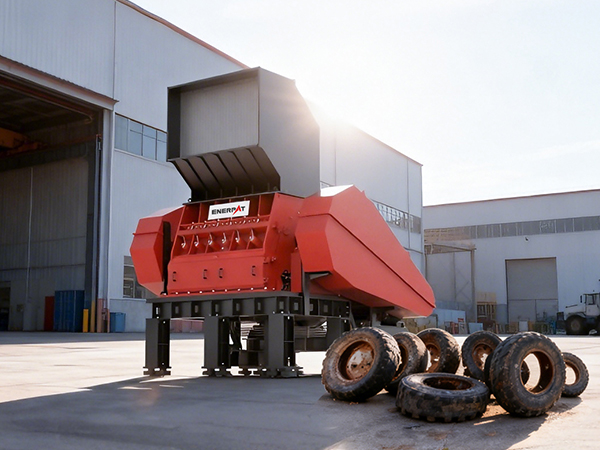
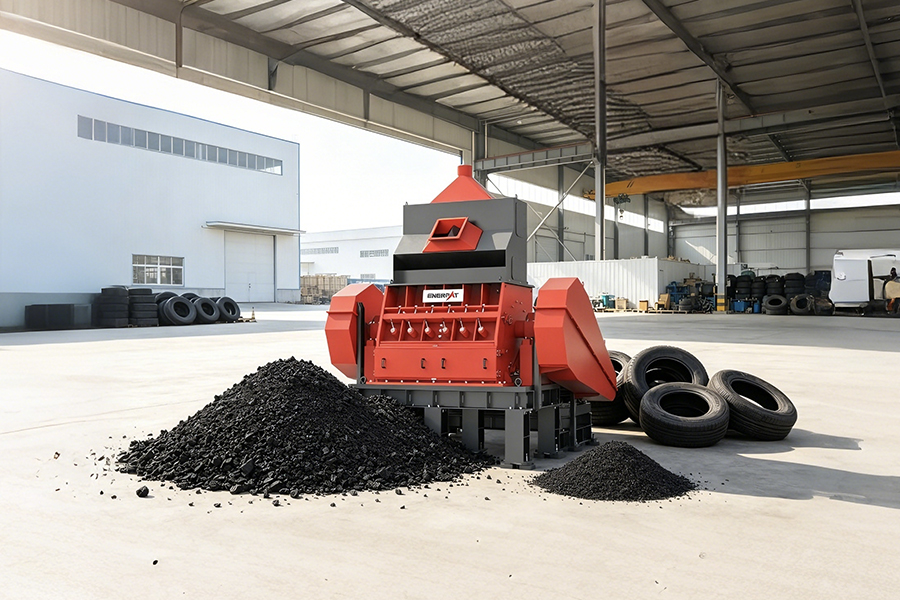
Tyre Recycling Shredder
The Tyre Recycling Shredder is an important first step for tyre recycling business in Australia. Under the 2021 export restriction, this machine is the go-to option for turning whole tyres into manageable tyre chips under 150 mm. It is ideal for businesses focusing on volume reduction, TDF production, or initial recycling processing.
Tyre Steel Wire Separator
The Tyre Steel Wire Separator removes embedded steel from shredded tyres and improves rubber purity. Through the separation, you can offer cleaner rubber to downstream buyers such as crumb rubber and pyrolysis processors to make more money. At the same time, recovered steel can be sold as an additional recyclable material, helping increase overall project value.
Tyre Granulator Machine
The Tyre Granulator Machine further refines tyre chips into crumb rubber or rubber powder. It is essential for businesses targeting higher-value applications such as sports surfaces, asphalt, and industrial rubber products.
Tyre Recycling Plant
A Tyre Recycling Plant is a complete, integrated solution that combines shredding, separation, and granulation into one system. Its modular design allows you to start with a basic setup and expand gradually as their business grows. It can help you control initial investment while keeping the option to scale into a full production line in the future. It is ideal for investors or operators who are planning long-term growth and stable returns.
Conclusion
Old tyres are no longer useless waste. Instead, they can become multiple revenue streams. Whether you plan to produce tyre chips, crumb rubber, or build a complete recycling plant, Enerpat can offer reliable and efficient solution for your business.
FAQ:
Q: What is the difference between a tire shredder and a tire baler?
A: A tire shredder cuts waste tyres into smaller chips for recycling, fuel, or further processing, while a tire baler only compresses tyres for storage and transport. In Australia, due to the 2021 export restrictions, balers are less commonly used, and shredders have become the main solution for on-site tyre processing and material recovery.
Q: Can tire shredders handle OTR tires?
A: Yes, but heavy-duty OTR tyres require a robust dual-shaft shredder designed for large, tough materials. Pre-cutting or specialised equipment may also be needed to ensure safe operation, stable performance, and reduced machine wear in mining or industrial applications.
Q: What is the difference between tyre chips and crumb rubber?
A: Tyre chips are larger, coarse pieces made in the shredding stage. Crumb rubber is finer, more refined material produced through granulation. Crumb rubber has higher value and is used in sports surfaces, asphalt modification, and rubber manufacturing.
Q: How do I choose the right tyre recycling equipment?
A: The choice depends on your target output and business model. Shredders suit volume reduction and TDF production, while granulators produce fine rubber materials. For full recovery systems, a complete line with separation and sizing delivers higher efficiency and profit.
Q: How long do tyre shredder blades last?
A: Blade lifespan varies based on tyre type, metal content, and operating load. With proper maintenance and clean feedstock, blades can last for hundreds of thousands of tyres. Regular inspection and timely replacement help maintain cutting efficiency and reduce downtime.
Q: What should I consider before investing in a tyre recycling business?
A: Key factors include local tyre supply, product demand, equipment investment, and regulatory compliance. You should also evaluate transport costs, labour conditions, and downstream buyers. A clear business model ensures stable returns and long-term operational sustainability.



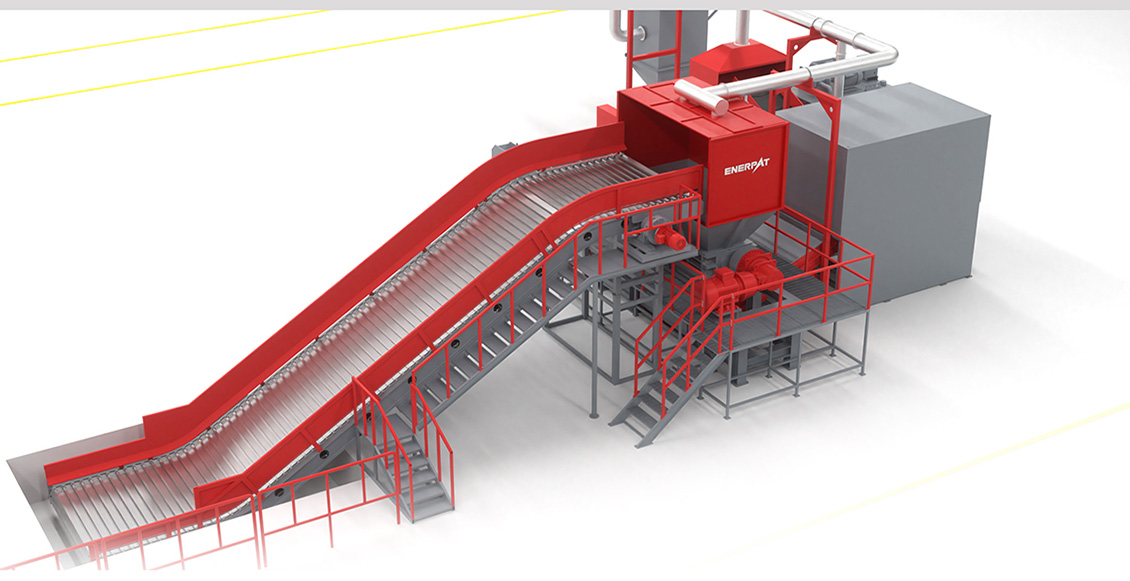 Oil Filters Recycling Line
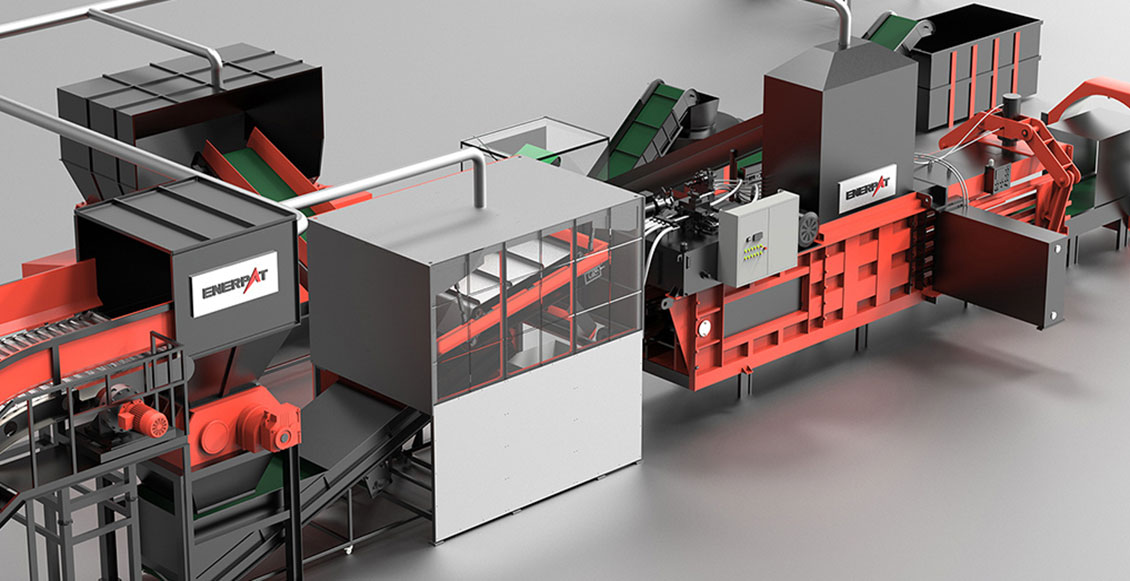 Pocket Coils Shredding and Sorting Solution
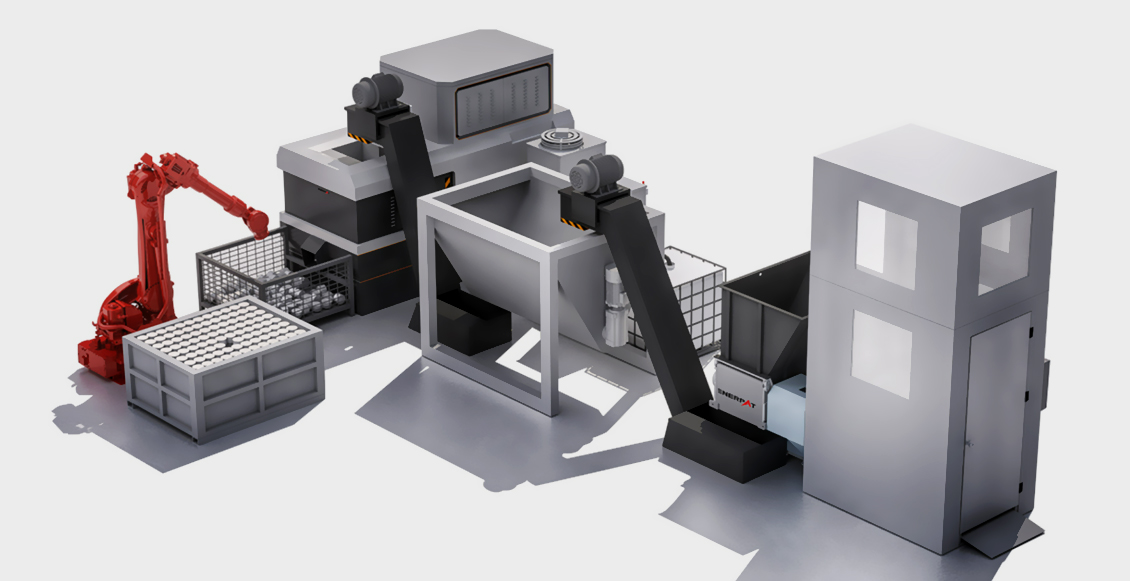 Disposal Solutions for Scrap Metal Chips
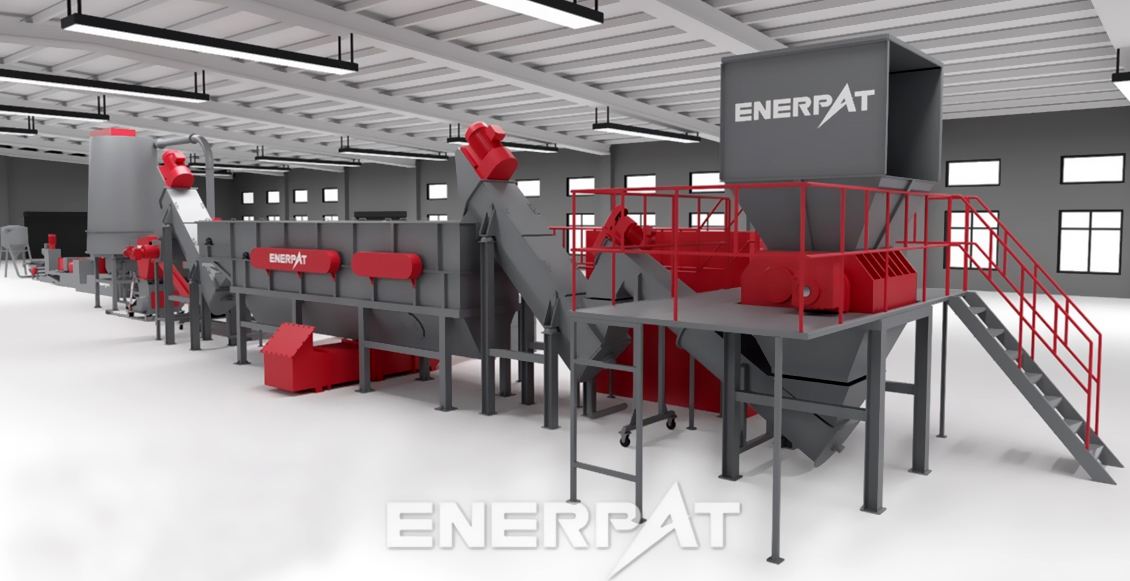 General Industrial Waste Recycling Solution
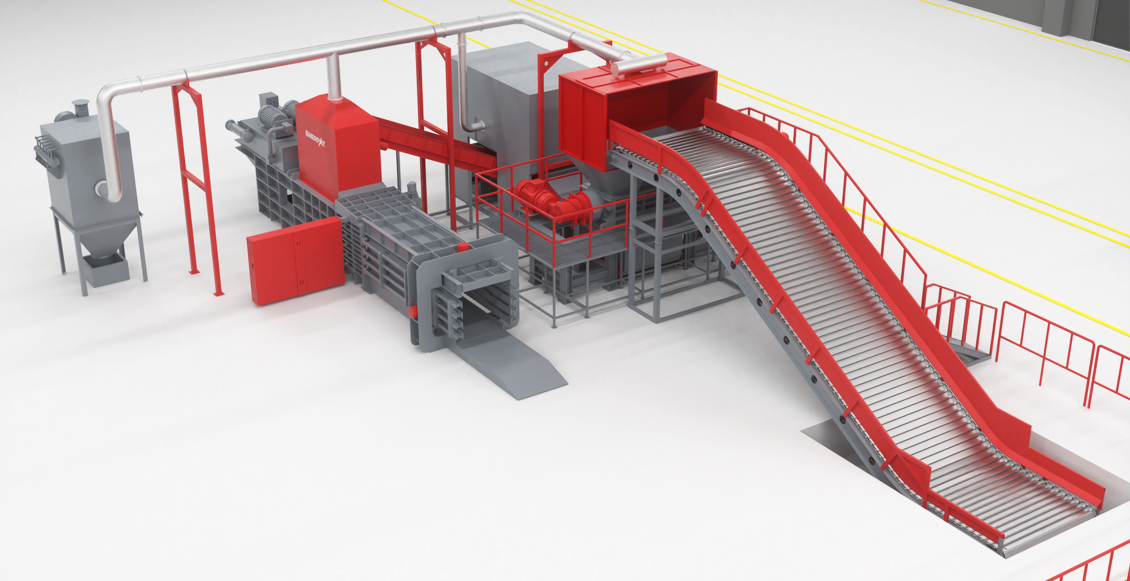 Bulky Waste Recycling System
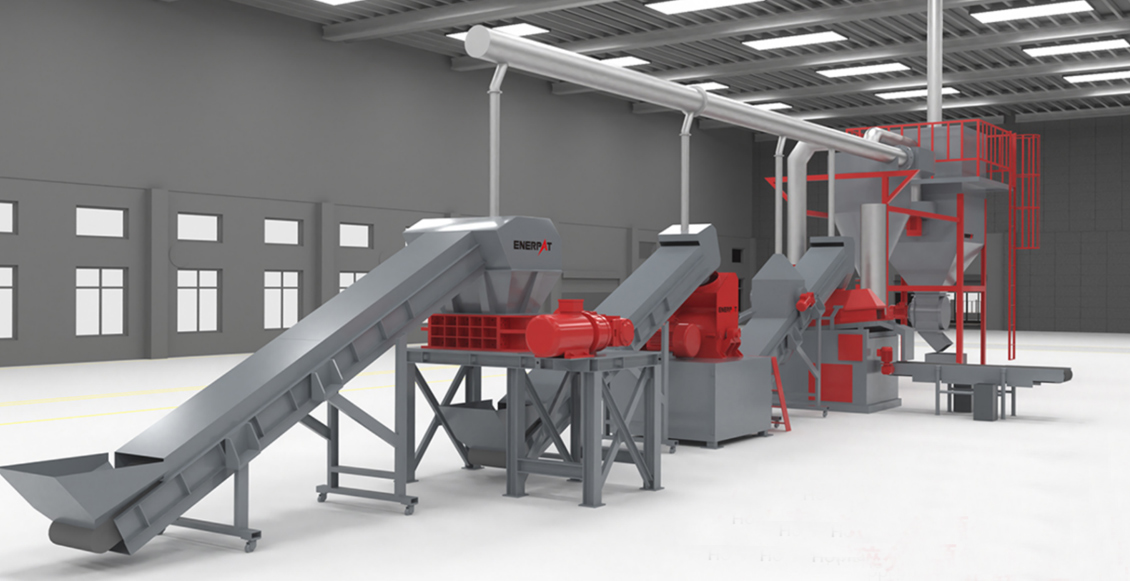 Home Appliances Shredding and Sorting Recycling Solution
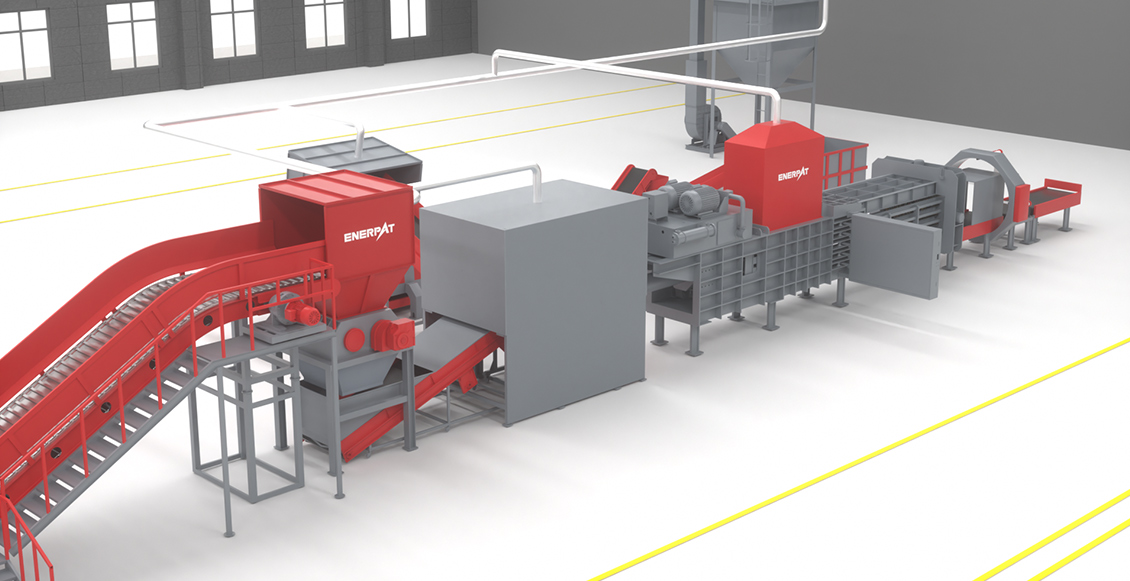 Plastic Film Washing and Pelletized Line
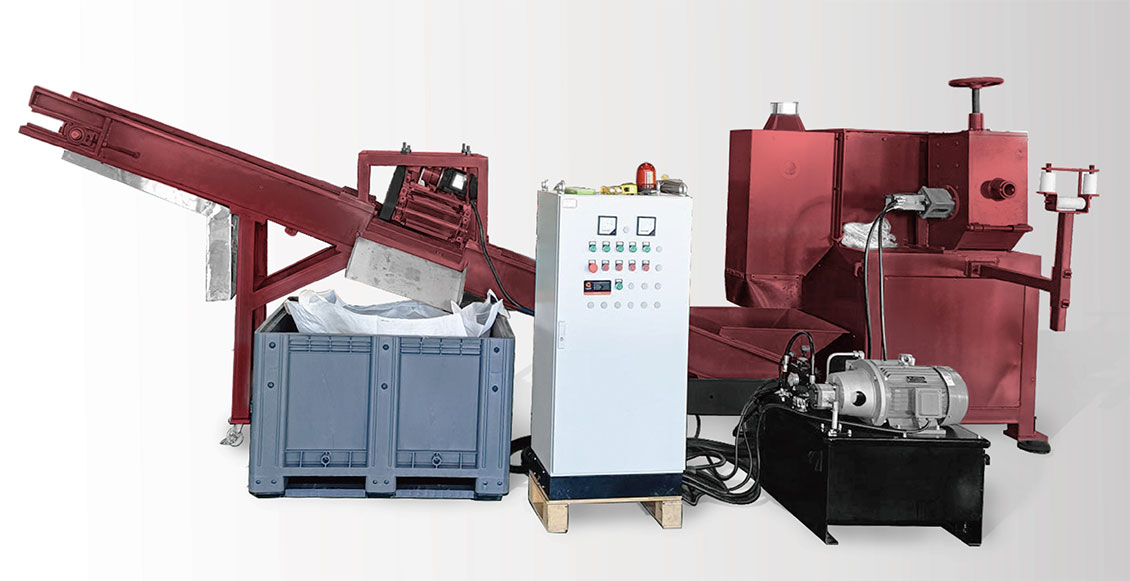 ACSR Recycling Solution
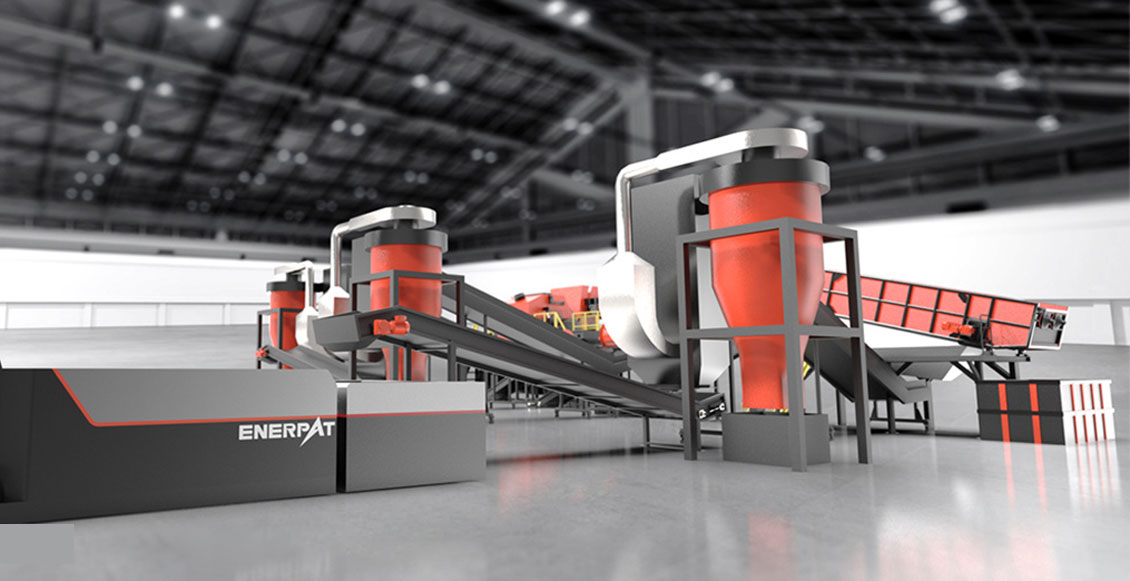 Cast Aluminum Shredding and Recycling Line
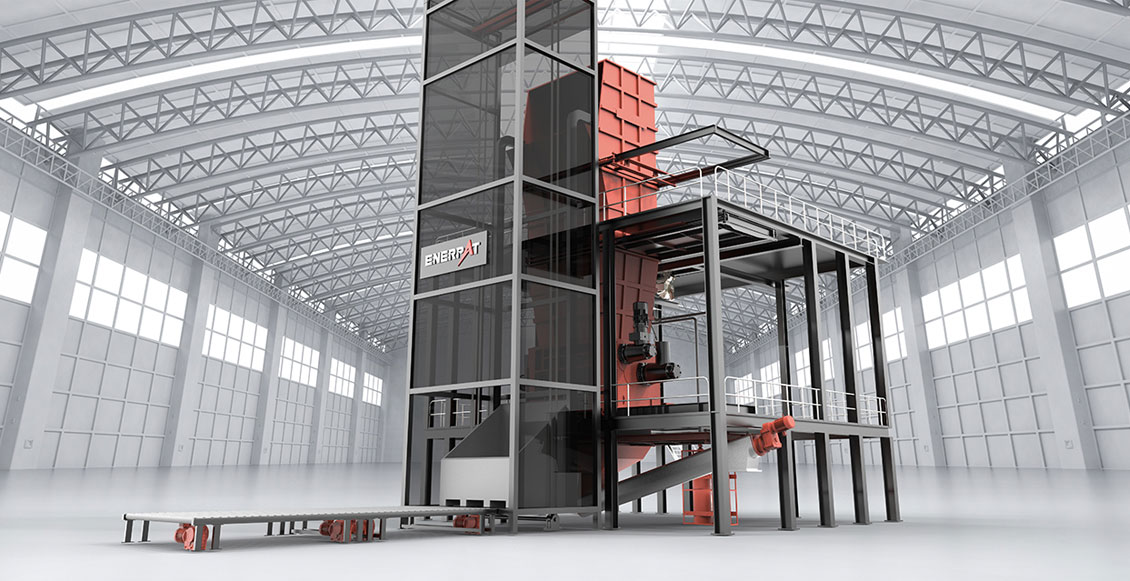 Lithium Ion Battery Recycling Plant
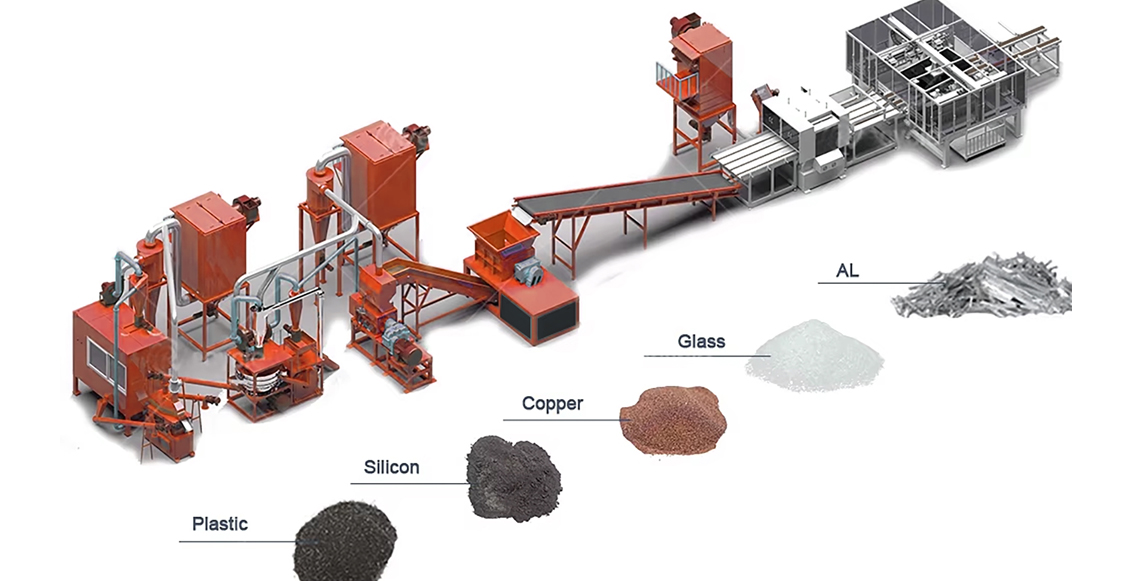 Solar Panel Recycling Equipment Line
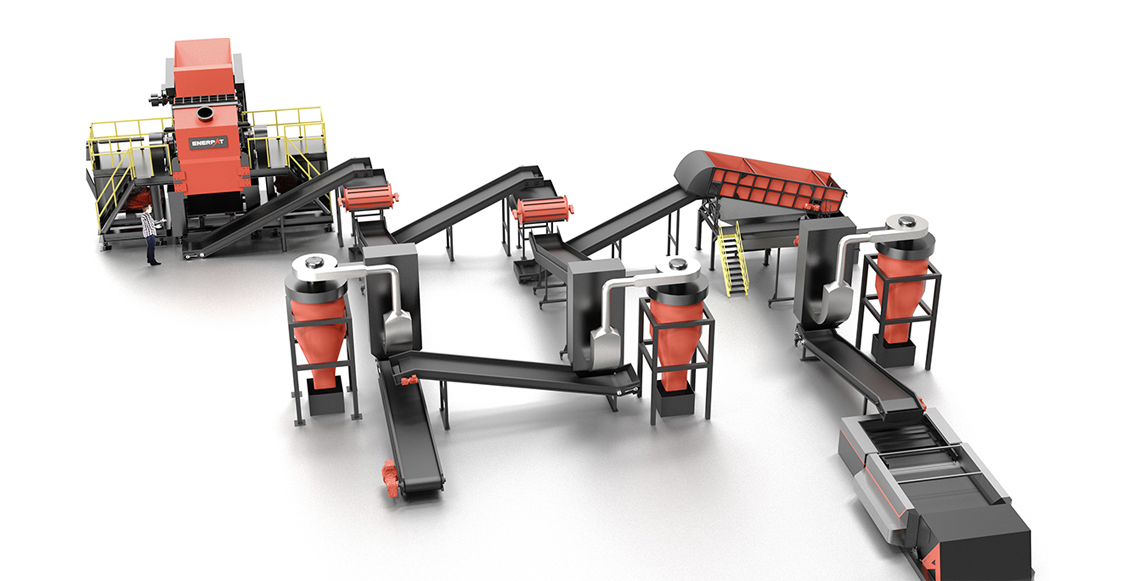 Aluminium Scrap Recycling Plant
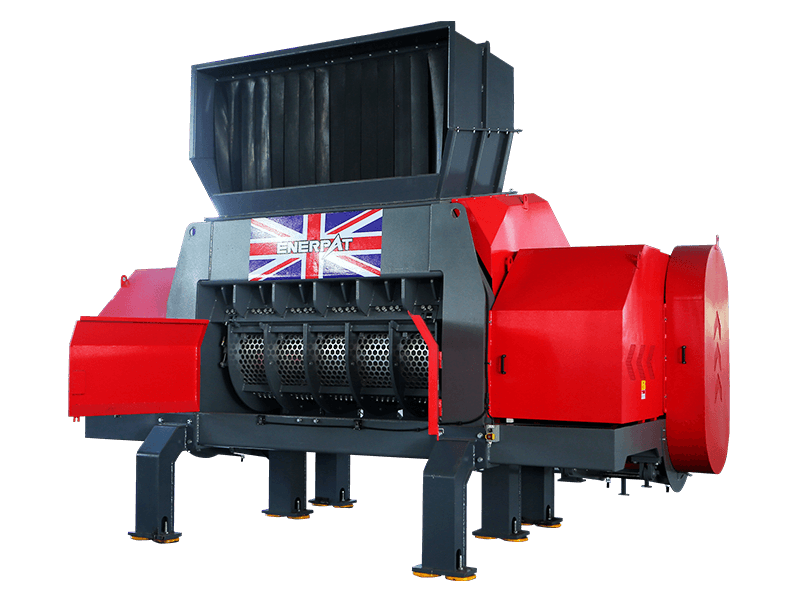 Single Shaft Shredder
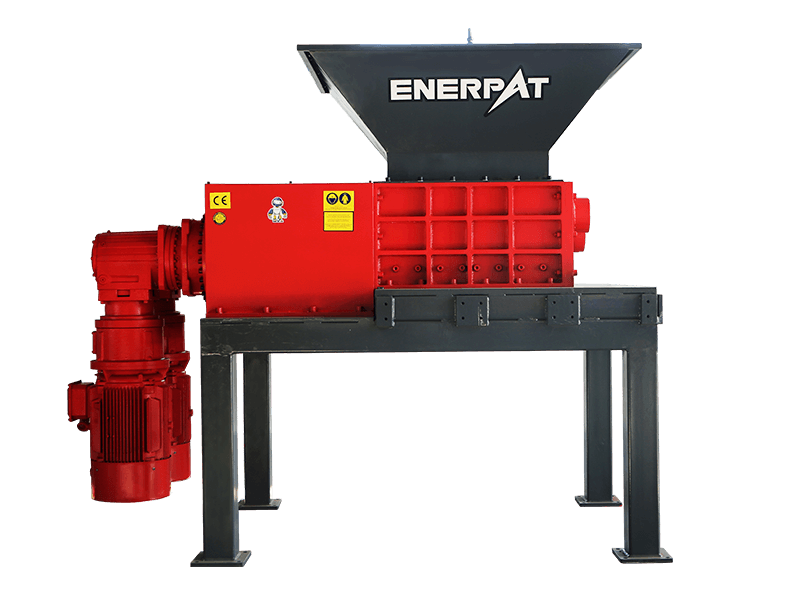
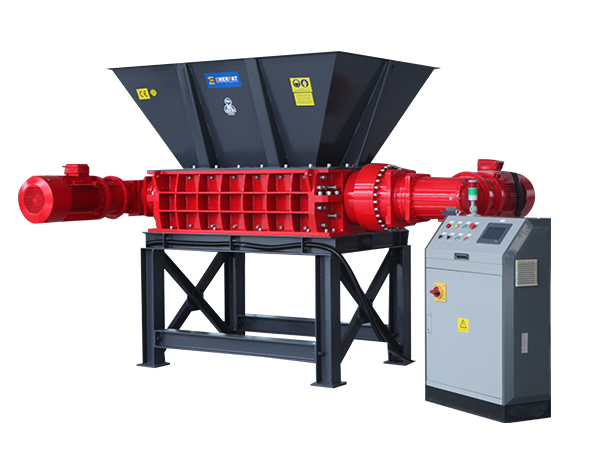 Two Shafts Shredder
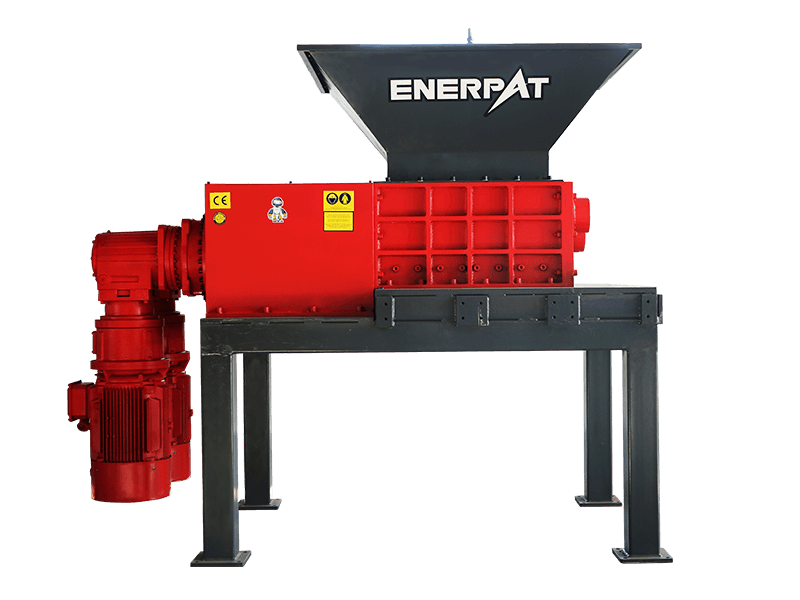 Four Shafts Shredder
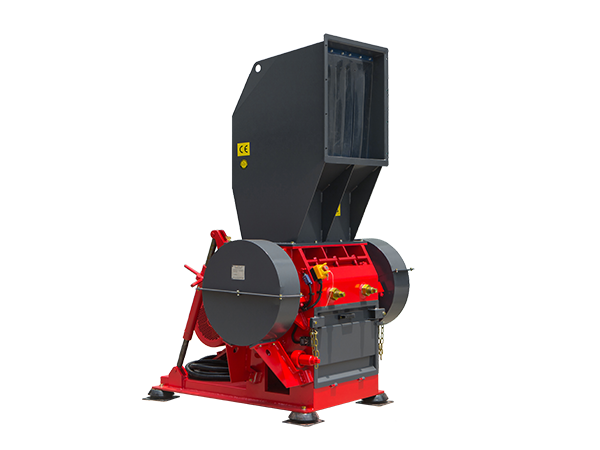 Granulator
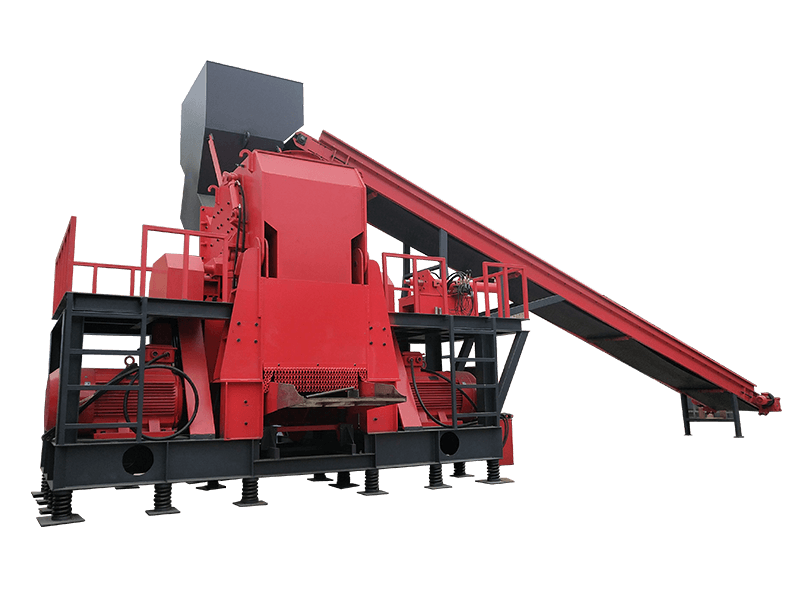 Hammer Mill
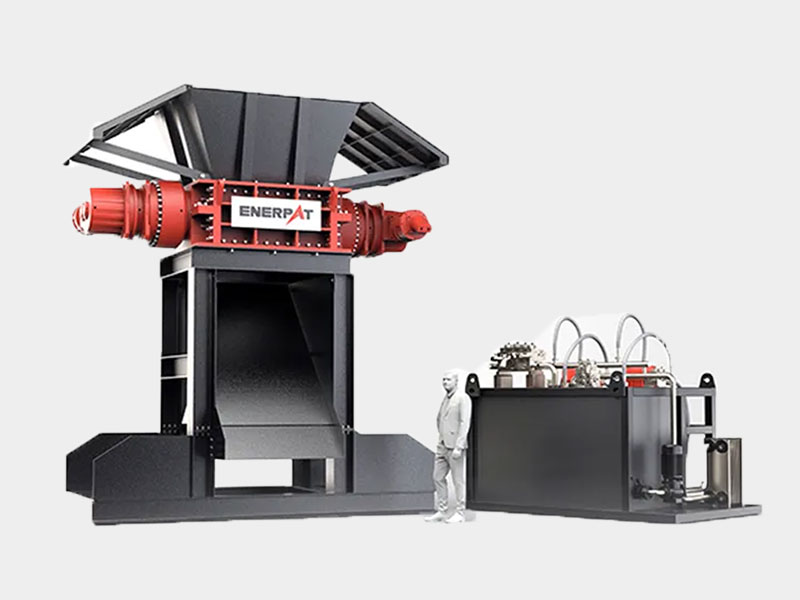 Hydraulic Shredder






 Email:
  Phone:
 Add:
Add:
 Whatsapp